
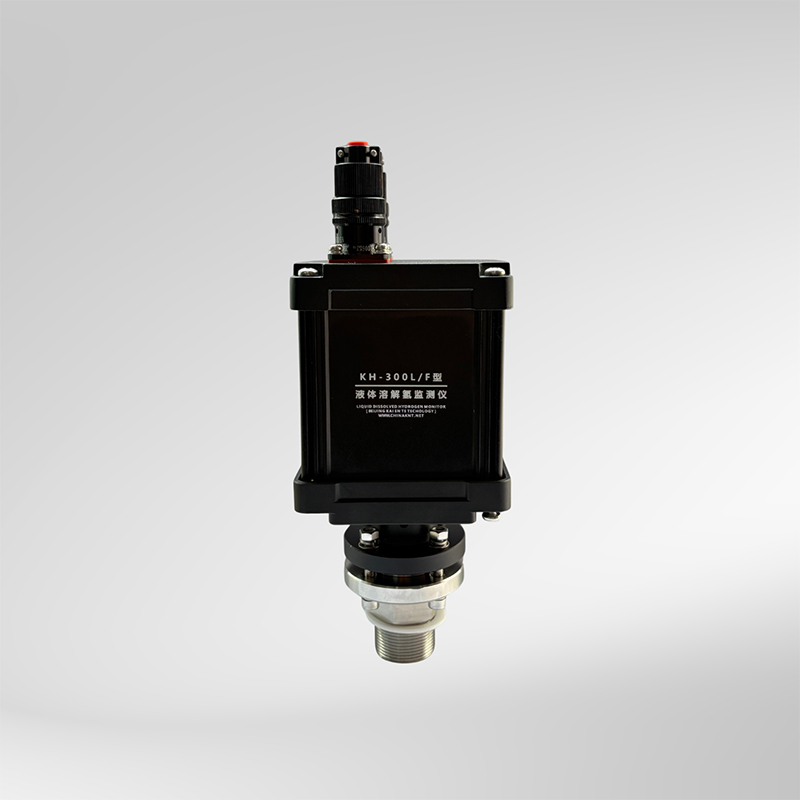
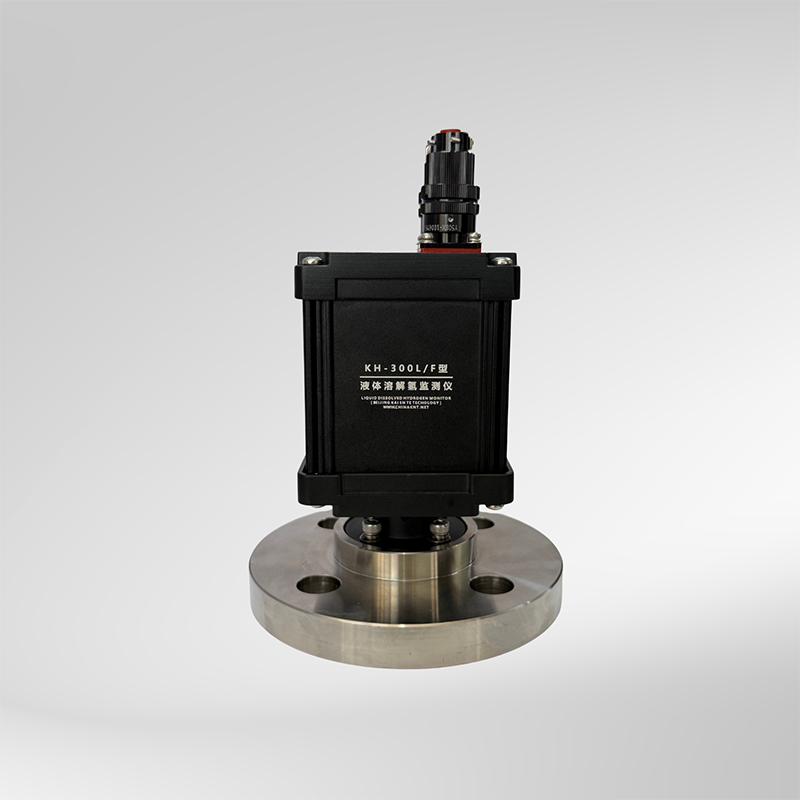
KH-300L/F Dissolved Hydrogen Monitor
The H-300L Online Dissolved Hydrogen Monitor is based on advanced palladium-alloy sensing technology and is specifically designed to measure dissolved hydrogen concentrations in liquid media such as water and insulating oil. It enables continuous, real-time monitoring of dissolved hydrogen from trace to standard concentration levels, replacing conventional offline manual sampling and analysis. By eliminating delays in monitoring, the instrument provides accurate data support for equipment safety and process control in the electric power, nuclear power, and chemical industries.
-
Product Features
Palladium-Alloy Sensing Technology for Accurate and Traceable Measurement
The monitor uses solid-state palladium-based ternary-alloy thin-film sensing technology. Hydrogen atoms are adsorbed into the palladium lattice, causing a measurable change in electrical resistance that directly converts the dissolved hydrogen concentration into highly accurate data. It precisely captures hydrogen concentration trends ranging from trace to standard levels, with fully traceable measurement data.
Oil–Gas Separation Membrane for Exceptional Interference Resistance
The probe incorporates an integrated oil–gas separation membrane that separates the liquid and gas phases while preventing impurities in the liquid from entering the sensing element. Its sensitivity to common interfering components such as CO₂ and hydrocarbons is less than 2%, ensuring excellent measurement stability even in complex oil- and water-based media.
Continuous Online Monitoring Without Manual Sampling Delays
The system replaces conventional manual sampling and chromatographic analysis with continuous 24/7 online monitoring. It immediately detects sudden changes in dissolved hydrogen concentration, providing rapid data support for early fault warnings—such as incipient transformer faults—and process optimization and control.
Intelligent Early Warning for Enhanced Equipment Safety
Equipped with intelligent data processing and analysis capabilities, the system automatically triggers alerts based on changes in concentration trends. This enables potential safety hazards to be identified at an early stage and helps prevent unexpected equipment failures.