
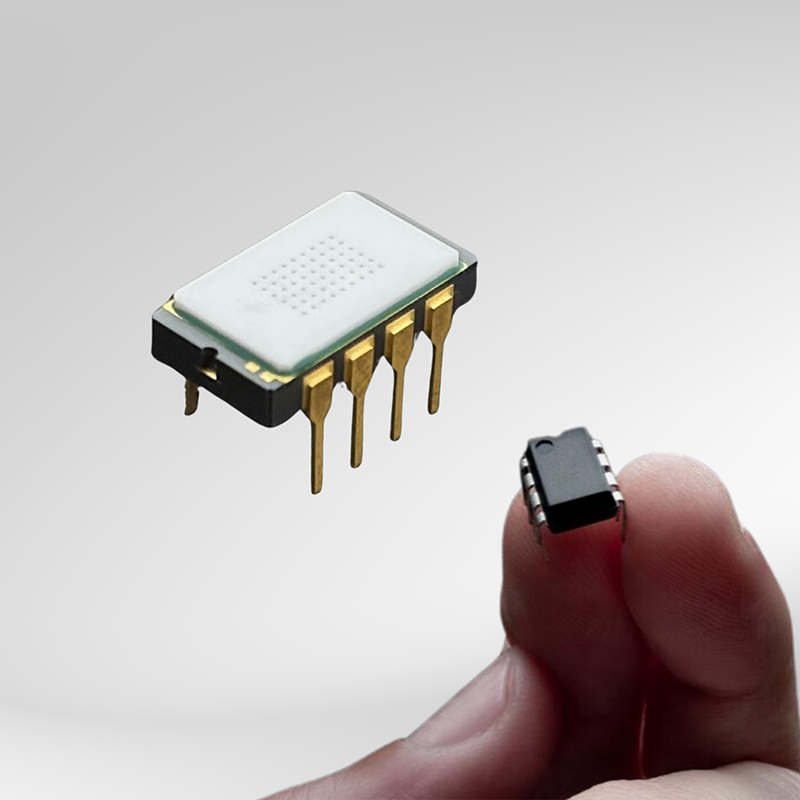
GSS-21 Palladium Alloy Hydrogen Sensor
The GSS-21 uses a palladium-based alloy nanofilm as its core sensing element, manufactured through a precision magnetron sputtering process. Compared with conventional electrochemical, catalytic combustion, and semiconductor sensors, the GSS-21 offers fundamental technological advantages and is specifically designed for complex industrial applications such as hydrogen production, chemical processing, and electric power.
-
Product Features
Exceptional Selectivity with Zero Cross-Interference
Palladium-Alloy Properties: Reacts selectively with hydrogen through a specific lattice interaction, detecting hydrogen only.
Strong Interference Resistance: Completely unaffected by common industrial gases such as CO, H₂S, CH₄, and VOCs, effectively eliminating false alarms and missed detections.
Millisecond-Level Response for Critical Early Warning
Ultra-Fast Response: The nanofilm structure enables rapid gas penetration, with a response time of ≤1 second and a recovery time of ≤3 seconds.
Real-Time Monitoring: Significantly faster than conventional sensors with minute-level response times, making it ideal for highly dynamic safety-warning applications such as hydrogen refueling stations and nuclear power systems.
Industrial-Grade Stability with Extremely Low Drift
Long-Service-Life Design: No electrolyte depletion and no risk of catalyst poisoning, supporting continuous 24-hour operation.
High Reliability: Zero drift of <±1% F.S. and span drift of <±2% F.S., reducing maintenance costs by more than 60%.
Strong Environmental Adaptability with Wide-Temperature and Poisoning Resistance
Poisoning Resistance: Highly resistant to sulfides such as H₂S and chlorides such as HCl, making it suitable for harsh chemical environments.
Wide Temperature Range: Maintains consistent performance from -40°C to 150°C.
Full-Range Detection with Low Power Consumption and Easy Integration
Wide Measurement Range: Supports full-range detection from 0.1 ppm to 100% vol., covering both trace leakage detection and high-concentration monitoring.
High Accuracy: Measurement accuracy of up to ±0.5% F.S.
Easy Integration: Milliwatt-level ultra-low power consumption and standardized interfaces enable seamless integration into IoT systems and automated production lines.